
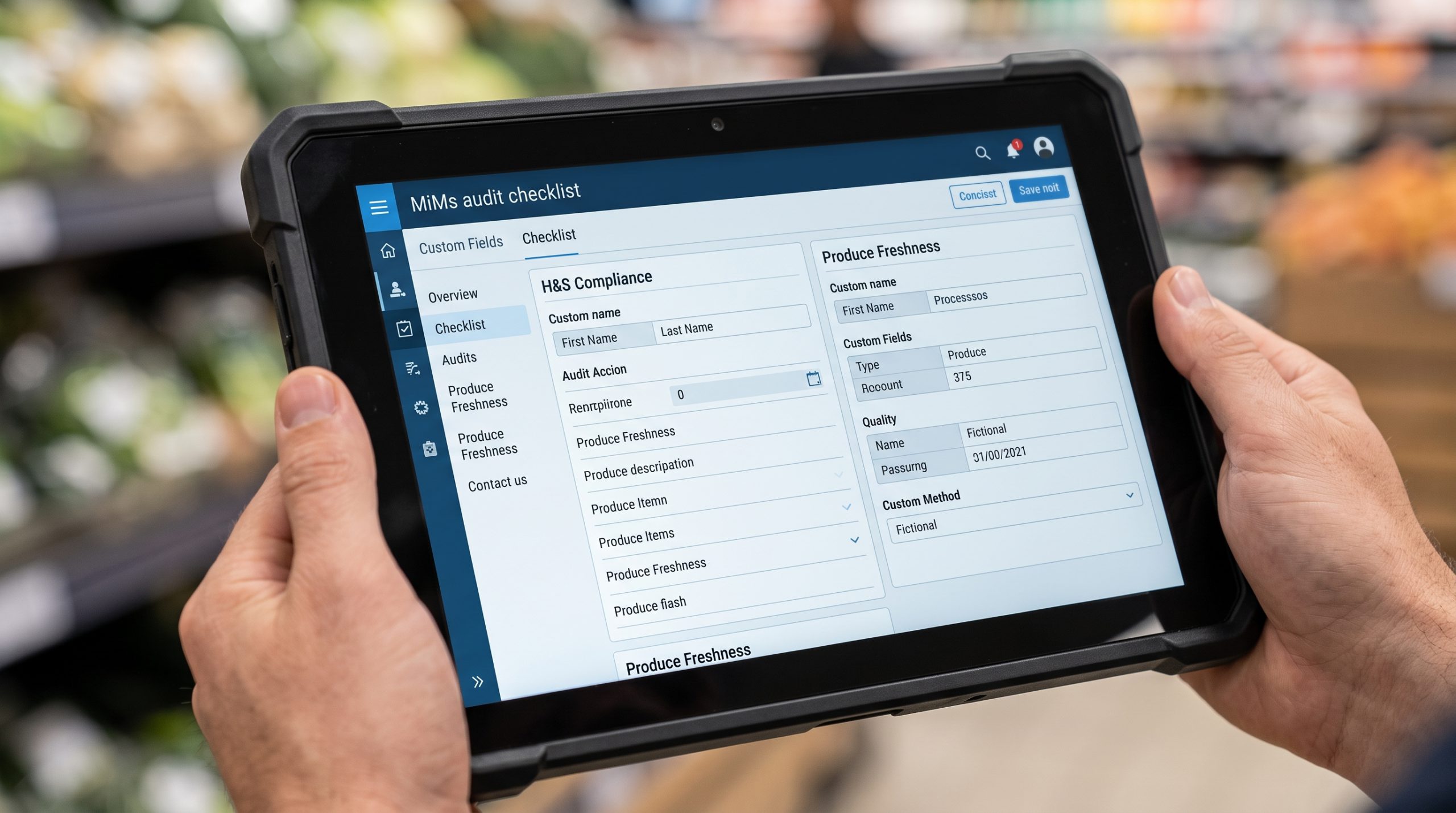
Paper checklists are honest about one thing: they are cheap to start and expensive to run. On a single site the clipboard works. Across many sites it quietly becomes a data-loss machine — forms that never leave the vehicle, findings that never leave the site, and a head office that only sees the estate at month-end, if then.
Moving from paper to digital inspections is not really a technology project. It is a change to how work is recorded, routed and closed. Done in a rush, it produces “paper on a screen” — the same broken process with a login. Done well, it removes whole categories of risk. Here is a practical way through it for a multi-site operation.
Start with why paper hurts at scale
Before you digitise anything, be clear about the specific failures you are fixing. In most estates they are:
- Latency. A hazard found on Monday is only visible to management when the paper arrives — sometimes weeks later, sometimes never.
- Inconsistency. Each site drifts into its own version of the checklist, so results cannot be compared or rolled up.
- Loss. Paper gets wet, lost, or filed in a drawer nobody opens until an auditor asks.
- Dead ends. A finding on paper has no built-in owner or due date, so closing the loop depends on somebody remembering.
If you cannot name the failure a feature fixes, you do not need that feature yet.
Digitise the process, not just the form
The temptation is to photograph your existing checklist and recreate it field-for-field. Resist it. A paper form is shaped by the limits of paper — no logic, no routing, no evidence attached. A digital inspection can do things paper never could:
- Show or hide questions based on earlier answers, so inspectors only see what is relevant.
- Require a photo or comment when something fails, so “not compliant” always comes with evidence.
- Stamp who, where and when automatically — the metadata that makes a record defensible.
- Turn a failed item straight into a tracked action with an owner, rather than a note to type up later.
Rebuild your inspections and checklists around what the digital medium allows, not around the paper you are replacing.
Standardise centrally, execute locally
The single biggest win from going digital is consistency. Agree a master set of templates per site type — retail floor, warehouse, plant, shaft — owned and versioned centrally. Sites run the standard checks; head office gets comparable data. When a regulation or a lesson from an incident changes the standard, you update it once and it reaches every site immediately, instead of hoping fifty printed copies get swapped out.
Leave room for genuinely local checks, but keep the core comparable. Comparability is what lets you see that Site A closes findings in three days and Site B in three weeks — the insight paper can never give you.
Plan the rollout as a change programme
Technology rarely fails on features; it fails on adoption. A migration that survives contact with the workforce usually runs like this:
- Pilot on two or three representative sites. Prove the templates and the flow with real inspectors before you scale. Expect to rework the checklist after week one — that feedback is the point.
- Handle offline reality. Many South African sites — a mine, a remote depot — have patchy connectivity. Inspections must work offline and sync later, or field staff will quietly go back to paper.
- Train on the phone, not the theory. Short, hands-on sessions on the device people will actually use beat a slide deck every time.
- Run parallel briefly, then commit. A short overlap builds confidence; a long one entrenches the old habit. Set a hard cut-over date and stick to it.
- Roll out in waves by region or site type, carrying the lessons forward each time.
Close the loop and prove the value
The migration only pays off if findings actually get fixed. Route every failed item into a tracked corrective action with an owner and a due date, so nothing dies on the form. Then watch a handful of measures: inspection completion rate per site, average time to close a finding, and repeat findings. When those move, you have proof the change worked — and, incidentally, the exact evidence trail an OHS Act or MHSA inspector will want to see.
Key takeaway
Do not photocopy paper onto a screen. Redesign inspections to use logic, mandatory evidence and automatic routing; standardise templates centrally; pilot before you scale; and make sure every failed item becomes a tracked action. That is the difference between digital inspections and paper with a battery.
If you are weighing up a move off paper, a sensible first step is to pick two sites and one checklist and prove the flow end to end. We are happy to help you scope that pilot — book a demo and bring your worst clipboard.